
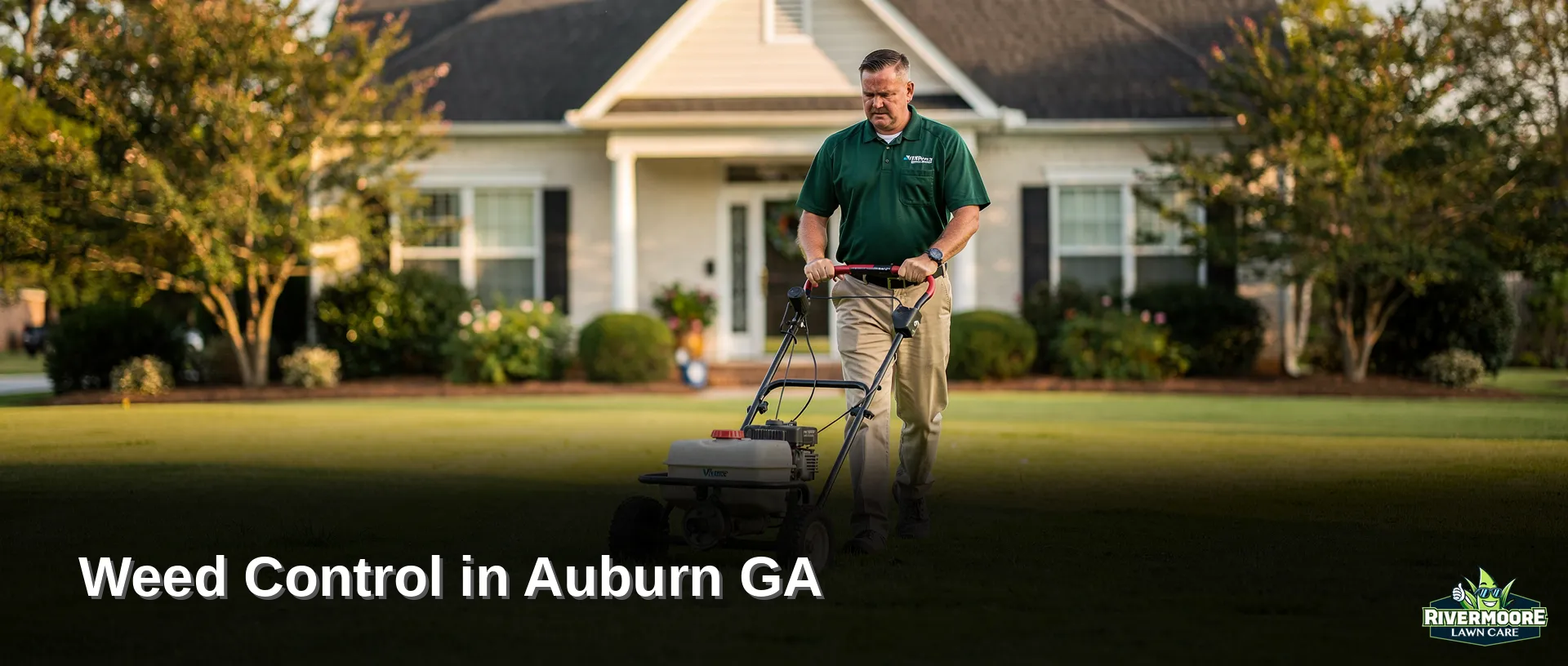
By Eric Raymond, owner, Rivermoore Lawn Care
Rivermoore Lawn Care’s 8-round program in Auburn, GA delivers fertilization and pre-emergent plus post-emergent weed control every four to six weeks. Each visit targets your specific grass type (bermuda, zoysia, or tall fescue) for a weed-free lawn. Pricing is based on your lawn’s size and needs, and there are no contracts.
Key Takeaways
- The 8-round program combines fertilization with pre- and post-emergent weed control, one round every 4 to 6 weeks.
- Each round is timed for your grass type: bermuda, zoysia or tall fescue.
- Pre-emergent stops weeds before they sprout; post-emergent treats the ones already visible.
- No contracts, backed by a handshake satisfaction guarantee: if you’re not satisfied, Rivermoore will make it right.
- The owner holds a Georgia Category 24 license, and Rivermoore has served the area since 2013.
- Based in Auburn and serving Dacula, Mulberry, Buford and Gwinnett County, with programs timed to red clay soil and local weed seasons.
Why do Auburn lawns need an 8-round program?
Auburn lawns face relentless weed pressure across three distinct growing seasons. An 8-round lawn care program delivers timed interventions that a four- or five-visit schedule misses, leaving your turf vulnerable for months. Without that consistent defense, Bermuda, Zoysia, and Fescue lawns lose density to aggressive summer annuals and winter weeds that germinate during gaps in coverage.
Rivermoore Lawn Care structures the program around one visit every 4 to 6 weeks. That cadence matches the life cycles of common invaders like crabgrass, dallisgrass, and poa annua. Each round pairs fertilization with weed control homeowners rely on to stop weeds before they surface. Pre-emergent barriers go down in early spring. Post-emergent treatments target what breaks through later. Miss either window and you spend the rest of the year chasing problems instead of preventing them.
What does each round in the 8-visit schedule actually do?
The program alternates between building soil health and neutralizing threats. Your lawn gets nitrogen, potassium, and micronutrients timed to its growth peaks. A technician applies pre-emergent herbicides when soil temperatures signal weed germination, then switches to post-emergent spot treatments once existing weeds turn visible. This is the 8-round lawn care program structure: eight precisely scheduled visits, not a generic quarterly spray-and-walk approach.
Why is the 4-to-6-week timing critical for weed control in Auburn?
Stretch visits too far apart and you open an unprotected window. Crabgrass seeds take advantage of bare soil during that gap. Auburn sits in USDA zones 7b to 8a, so the spring warm-up and fall cool-down both arrive on a schedule a local program can plan around. By returning every 4 to 6 weeks, Rivermoore Lawn Care maintains a continuous chemical barrier through spring germination, summer growth, and fall transition. Lasting weed control requires this frequency.
Turf-type Fescue struggles through hot summers without steady nutrition and moisture retention. Zoysia and Bermuda recover from wear when fed on schedule. Thin lawns invite more weeds, and more weeds mean thinner lawns. Eight rounds break that cycle. They keep your grass dense enough to shade out intruders before you ever see them.
What tools and prep do you need before starting?
Effective lawn weed control in Auburn starts before any product touches the grass. Proper preparation prevents wasted treatments and ensures every application delivers maximum results. Without the right groundwork, you risk uneven coverage, product runoff, and weeds that bounce back stronger.
Preparing your lawn for weed control service takes a few simple steps. Skipping a step leaves gaps in your lawn’s defense.
What should you check on your lawn before treatment?
Start with a thorough walk of the property. Identify the dominant weed types growing in your turf. Note any bare patches, drainage issues, or stressed areas. Remove lawn debris, toys, and pet bowls from the treatment zone. Mow two to three days before the scheduled application. Cutting too close to treatment day stresses the grass. Cutting too early allows weeds to grow protective new leaves.
Mark underground utility lines and sprinkler heads with small flags. This protects your irrigation system from accidental damage. Water the lawn lightly 24 hours before treatment if the soil feels dry and hard. Moist soil helps pre-emergent barriers bond correctly. Dry, compacted dirt repels the treatment.
What do technicians handle that you don’t need to worry about?
Professional providers shoulder the heavy technical work. Rivermoore Lawn Care sends its own trained technicians directly to your Auburn property. These technicians mix and apply EPA-approved products at precise rates for bermuda, zoysia and tall fescue. They calibrate spray equipment to avoid drift onto hardscapes or ornamental beds.
How does the first round establish weed control?
The first round of the program sets the foundation for season-long weed suppression. Without this critical first step, broadleaf and grassy weeds gain a foothold that later treatments struggle to reverse.
What happens during the initial application?
The technician applies a pre-emergent herbicide across your entire lawn. This creates a chemical barrier in the top layer of soil. When weed seeds attempt to sprout, the barrier stops cell division in the emerging root. The seed dies before it ever breaks the surface. You see nothing happen, and that is exactly the point. The weeds never appear.
Post-emergent weed control follows immediately for any weeds already visible. The technician spot-treats existing dandelions, clover, and other broadleaf invaders. This dual-action approach, combining pre-emergent and post-emergent weed control, addresses both current and future threats in one visit.
Why does timing matter so much in Auburn?
Auburn’s warm-season turf, including bermuda and zoysia, breaks dormancy as the soil warms in late winter, and summer weed seeds germinate at the same time. A pre-emergent barrier applied ahead of that warm-up catches the first flush of crabgrass and goosegrass. Tall fescue lawns follow a different calendar, with the critical window opening in fall, when soil temperatures drop to about 70°F. Missing either window means surrendering your lawn to weeds for months.
What happens during rounds two through five?
Rounds two through five build on the foundation laid in round one. These spring and early summer visits deliver targeted weed prevention and steady nutrition. Timing matters. Each round occurs once every 4 to 6 weeks, aligning treatments with your lawn’s active growth phases. Skipping even one round invites weeds to reclaim bare spots before your grass can fill them.
Your lawn shifts into high gear during these weeks. Bermuda, zoysia, and tall fescue need consistent feeding and protection. Here is the standard sequence technicians follow:
- Inspect the entire lawn for broadleaf weeds and early signs of disease.
- Apply a balanced fertilizer blend matched to your grass type and the season.
- Treat any emerged weeds with post-emergent control before they spread seed.
- Check soil moisture levels and note problem areas for follow-up care.
How does the fertilizer change across these rounds?
Nitrogen levels and nutrient ratios shift as temperatures climb. Early rounds push root development. Later rounds support leaf thickness and color. Matching the blend to the season prevents surge growth that weakens turf.
Are pre-emergents still being applied?
Pre-emergents target summer weeds that germinate in warming soil. This layered strategy stops crabgrass and goosegrass before they break through. Your weed control service works best when these barriers are refreshed on schedule.
By round five, focus turns to post-emergent spot treatments. Persistent invaders like dallisgrass or nutsedge receive direct attention. Short intervals between visits mean no weed gets months to spread unchallenged. The 8-round program uses this rhythm to keep your lawn dense and resilient through the hottest part of the year.
How do late-season rounds handle stubborn weeds?
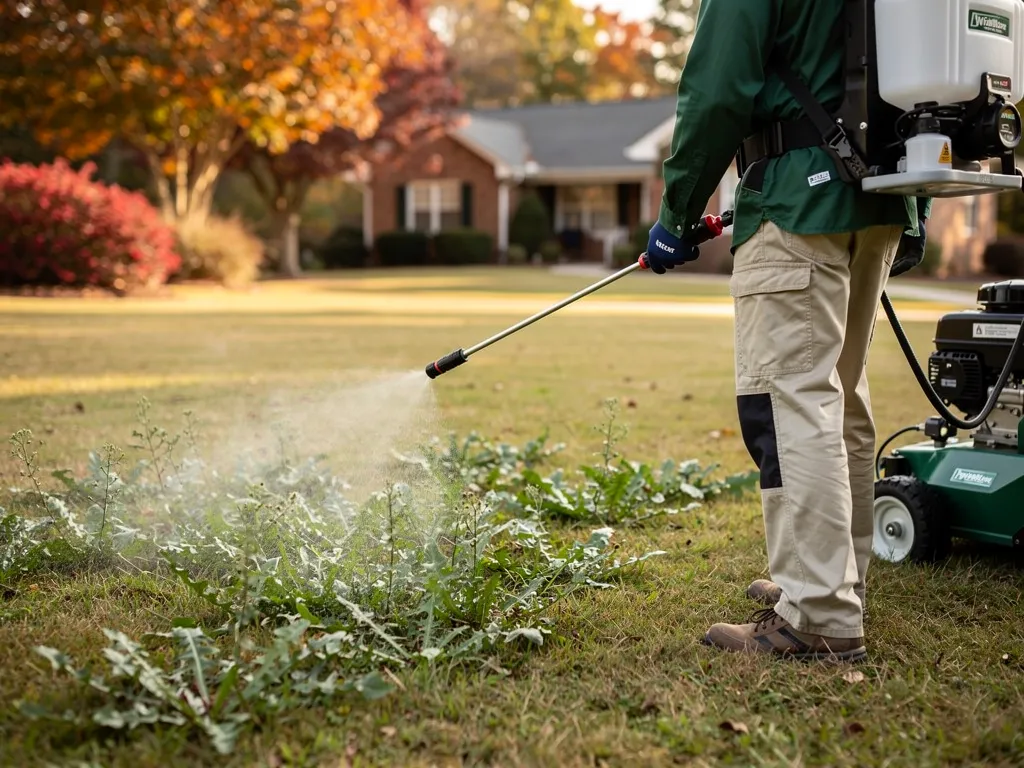
Late-season rounds target weeds that survived earlier treatments. The 8-round program includes post-emergent weed control for exactly this purpose. Skipping these final applications lets mature weeds drop seed before winter. That seed load becomes next spring’s weed problem, multiplying your maintenance burden.
What makes late-season weed control different?
Late-season treatments focus on weeds that have already emerged and hardened off. These plants have deeper root systems and thicker leaf cuticles. Post-emergent products applied during cooler fall weather move into the roots more effectively. The plant stores the active ingredient instead of pushing new top growth.
Why do Auburn lawns need late-round attention?
Auburn’s warm-season grasses slow down in fall, but many weeds keep growing. That growth window gives post-emergent treatments a clear target. Follow these steps to get the most from late-season rounds:
- Keep your scheduled rounds active. Each visit builds on the previous application’s residual control.
- Allow the technician to treat visible weeds. Post-emergent products need direct leaf contact to work.
- Water only as directed after each treatment. Improper watering washes product off target weeds.
- Report new weed outbreaks between visits. Early identification prevents seed production.
What should you do between technician visits?
Homeowners maximize the 8-round program results by following a few straightforward maintenance steps between professional treatments. Water deeply when nature falls short. Mow at the correct height for your grass type. Watch for early trouble signs that need attention before the next scheduled visit.
How much should you water between professional treatments?
Bermuda and zoysia lawns need about one inch of water per week, including rainfall. Tall fescue requires slightly more during hot summer stretches. Water between 4 a.m. and 9 a.m. to reduce evaporation and fungal pressure. A quick test: if footprints stay visible in the grass for more than 30 minutes, the lawn is thirsty. Deep, infrequent watering drives roots downward. Shallow daily sprinkling weakens the turf and invites weed pressure to undo your weed control progress.
What mowing practices protect your lawn investment?
Never remove more than one-third of the grass blade in a single mowing. Cutting too short scalps the turf and opens space for weeds to germinate. Keep mower blades sharp. Dull blades tear grass tips, leaving ragged edges that brown out and invite disease. Vary the mowing pattern each time. Repeatedly following the same wheel tracks compacts soil and creates ruts.
Follow this simple between-visit checklist:
- Water: One inch per week, early morning, with deep soakings
- Mow: Sharp blades, correct height, no more than one-third removal
- Observe: Discoloration, thin patches, or new weed emergence
- Clear: Remove debris, fallen branches, and leaf litter promptly
- Wait: Let applied treatments dry completely before heavy foot traffic
The company is proud of its work, backed by the Best of Gwinnett recognition eight years running. If something looks off between visits, reach out immediately.
When should you call about a problem instead of waiting?
Call as soon as you spot spreading discoloration, sudden thinning, or unfamiliar weeds appearing in treated areas. Quick reporting prevents small issues from escalating into costly recovery efforts. Auburn’s summer heat accelerates turf stress, and a two-week delay often transforms a minor correction into a full renovation need. You lose nothing by reaching out. Waiting risks the progress weeks of professional weed control treatments have already built.
How do you know if the program is working?
A successful 8-round program produces visible, measurable changes in your lawn. You track progress through specific yard conditions, not guesswork. Without clear benchmarks, you risk losing weeks of the growing season to persistent weeds and thinning turf.
What should you look for after the first two treatments?
- Inspect weed response within 10 to 14 days. Existing broadleaf weeds curl, yellow, or stop spreading. New weed seeds fail to germinate because the pre-emergent barrier holds.
- Check grass color and density. Turf shifts from pale or yellow-green to a deeper, uniform green. Bare spots begin filling as grass plants thicken.
- Note the mowing interval. A fertilized, healthy lawn requires more frequent mowing. This increased growth rate confirms the nutrients are working.
Rivermoore Lawn Care structures the program so each visit builds on the last. You see cumulative improvement rather than a single dramatic change.
How does the satisfaction guarantee protect your investment?
Rivermoore Lawn Care offers a handshake satisfaction guarantee (if a customer is not satisfied, Rivermoore makes it right). If any treatment falls short of expectations, the team returns and makes it right. You never wait through a season of poor results.
Rivermoore Lawn Care wants customers to be completely satisfied with every aspect of the service. This commitment covers the condition of your lawn and the responsiveness of communication. The company never locks customers into a contract. If the program does not exceed your expectations, you are not forced to continue. This policy keeps accountability on the provider, where it belongs.
What common mistakes should Auburn homeowners avoid?
Homeowners often sabotage their lawns through a handful of preventable missteps. Skipping pre-emergent treatments allows weeds to establish, while compacted soil starves roots of oxygen and water. These errors compound quickly in a hot, humid climate, turning a salvageable lawn into a costly restoration project.
Why is skipping pre-emergent weed control so damaging?
Weed control fails without early intervention. Pre-emergent herbicides create a barrier that stops weed seeds from germinating. Miss that window and you spend the rest of the season fighting visible weeds instead of preventing them. A structured weed control service applies these treatments at the right time, before soil temperatures trigger germination. The result is fewer weeds and less reactive spraying.
How does ignoring soil compaction hurt my lawn?
Compacted soil chokes root development. Auburn’s red clay is acidic and compacts easily, especially along driveways and play areas. Water, nutrients, and air cannot penetrate, leaving grass thin and vulnerable. Core aeration relieves this pressure, but many homeowners overlook it entirely. Core aeration pairs with the 8-round program as a complementary service to relieve compaction, ensuring roots expand and absorb what they need.
Other common mistakes include:
- Overwatering or watering at the wrong time. Early morning irrigation reduces evaporation and fungal risk. Evening watering invites disease.
- Mowing too short. Scalping stresses turf and invites weeds. Maintain the recommended height for your grass type.
What should I look for in a lawn care provider?
Expertise matters. Owner Eric Raymond holds a Georgia Category 24 license and brings more than 20 years of industry experience. That depth of knowledge translates into accurate diagnostics and effective treatment plans. Rivermoore Lawn Care is dedicated to meeting each customer’s needs and requirements.
Frequently Asked Questions
What grass types does the 8-round program cover?
Bermuda, zoysia and tall fescue, with each round timed to the grass you have.
How often does Rivermoore treat my lawn?
One round every 4 to 6 weeks, eight rounds a year.
Do I have to sign a contract?
No. Rivermoore works without contracts.
Who oversees the treatments?
Rivermoore’s own technicians, under an owner who holds a Georgia Category 24 license and uses EPA-approved products.
What areas does Rivermoore serve?
Rivermoore is based in Auburn and serves Auburn, Dacula, Mulberry, Buford and the rest of Gwinnett County.
The 8-round program delivers the weed-free lawn you expect when you follow the between-visit care and report problems quickly. Homeowners who commit to the full schedule, avoid common mistakes like skipping pre-emergent or compacting soil, and use the satisfaction guarantee as a safety net get the best results. Your next step is simple: stay consistent, watch for changes, and call at the first sign of trouble. To get started, request a free, no-obligation estimate or get an instant quote online at beweedfree.com.
Contact Us
At Rivermoore Lawn Care, we are so confident in our work that we are willing service you without a contract. If we do not perform to your high standard, we will make it right, and you are not locked into anything. Our deals are sealed with a handshake. Our lawn treatment service will speak for itself; it will keep you coming back year after year. Serving the Auburn area and surrounding since 2013, contact us today to put your lawn and landscape on the path to full health.
Rivermoore Lawn Care
Offering Fertilization And Weed Control in Auburn and Surrounding Cities. Transform your lawn today and contact Rivermoore Lawn Care to arrange for your first appointment.