

By Eric Raymond, owner, Rivermoore Lawn Care
Fall lawn fertilization in Buford requires a tailored approach for fescue, Bermuda, and Zoysia lawns. Rivermoore Lawn Care includes fertilization and weed control in every round of its 8-round program. This strengthens root systems before winter dormancy. Proper timing ensures your lawn emerges healthier and greener next spring.
Key Takeaways
Fall feeding builds the root reserves your lawn draws on for winter survival and spring green-up.
Bermuda and zoysia need their last nitrogen by early October, then potassium rather than more nitrogen.
Tall fescue grows most in fall, so it gets its main feedings in September through late fall.
A soil test shows whether your lawn needs lime before you fertilize.
Rivermoore’s 8-round program pairs fertilization with weed control every 4 to 6 weeks, timed to your grass type.
Based in Auburn and serving Buford, Dacula, Mulberry and Gwinnett County, with programs timed to red clay soil and local frost dates.
Why does fall lawn fertilization matter in Buford?
Fall lawn fertilization drives root development when warm-season grasses shift energy underground. Skipping this step leaves turf vulnerable to winter kill and guarantees a thin, weak stand come spring. Your lawn stores carbohydrates now for survival and next year’s green-up. Without that reserve, you lose density you cannot recover until late May.
Rivermoore Lawn Care delivers season-specific fertilizer treatments that match this critical window. The company serves homeowners with on-site programs built around your turf’s actual needs. Lawn fertilization in Buford, GA demands precise timing and the right nutrient balance. Apply too late and tender growth freezes. Apply the wrong ratio and roots starve while top growth stalls.
What happens to Buford lawns without fall fertilizer?
Bare patches spread. Weeds fill every gap. Warm-season grasses like bermuda and zoysia enter dormancy weakened, and spring dead spot becomes a real threat. A thin lawn also invites winter annual weeds that germinate in cooling soil. By February, you face a weedy mess instead of clean, dormant turf.
How does fall fertilization strengthen roots?
Nutrients reach the root zone when leaf growth slows. The grass stores carbohydrates in stolons and rhizomes, building reserves that fuel spring green-up. Stronger roots survive Buford’s freeze-thaw cycles intact. Fall feeding also thickens the root mass, crowding out weeds before they establish.
Rivermoore’s program includes this essential fall round. The owner holds a Georgia Category 24 license and uses EPA-approved products on every visit.
What tools and knowledge do you need before starting?
Fall fertilizing demands two things before any product touches the turf. A homeowner must identify the grass type and understand current soil conditions. Skipping either step wastes product and risks lawn damage.
What grass type do you have?
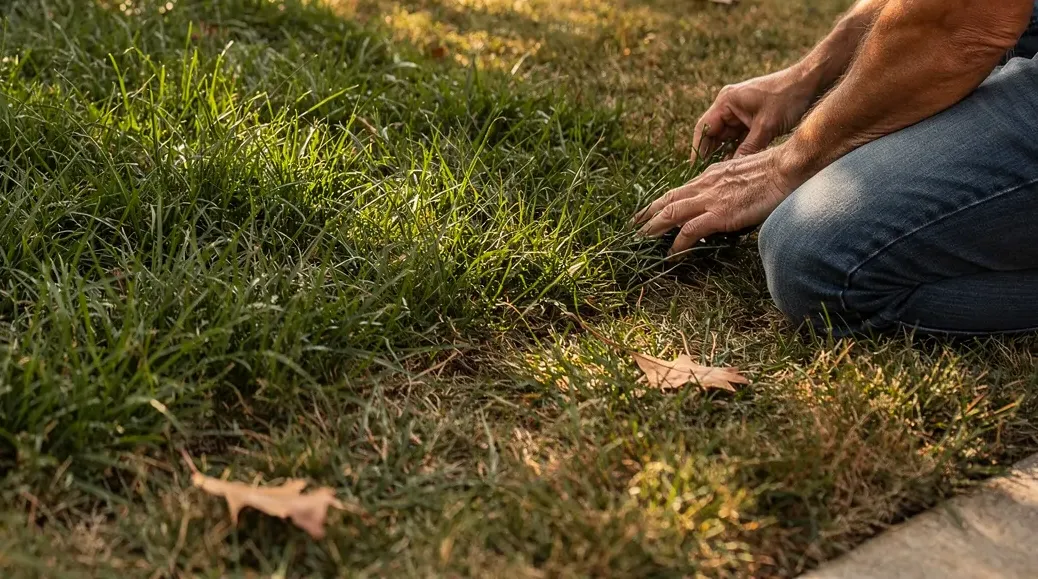
Identify whether the lawn is fescue, Bermuda, or Zoysia. Each grass responds differently to fall feeding schedules and nutrient blends. Fescue thrives in shaded areas and keeps deep green color through cooler months. Bermuda and Zoysia are warm-season grasses that store carbohydrates for winter dormancy. The grass type determines sun tolerance, shade performance, and winter color expectations.
Should you test the soil first?
Yes. A soil test reveals current nutrient levels and pH before any fall feeding begins. Buford’s red clay tends to be acidic, which is why a soil test here so often calls for lime. Potassium and lime remain useful in autumn even after nitrogen applications stop. Testing prevents over-application and corrects imbalances that weaken turf before winter stress.
What does a professional program include?
Rivermoore Lawn Care serves homeowners through an 8-round lawn care program with season-specific fertilization and weed control. The program schedules treatments every four to six weeks across the growing season. Each round targets the correct nutrient timing for fescue, Bermuda, or Zoysia.
Identify the grass type: fescue, Bermuda, or Zoysia.
Test soil for pH and nutrient levels.
Match fertilizer timing to the grass type.
How do you fertilize tall fescue lawns in fall?
Tall fescue lawns in Buford need a strategic fall feeding to build deep roots and dense top growth. Fescue grass flourishes during the cooler months, and fall is the primary growing season for this cool-season turf. Skipping this critical window leaves your lawn thin and vulnerable when summer heat returns.
What makes fall fertilization different for fescue?
Your fescue lawn shifts its energy below ground as temperatures drop. A nitrogen-rich application in September or October fuels root expansion rather than just blade growth. This stored energy determines how vigorously the lawn greens up the following spring. The goal is a lush, deep green appearance that holds through winter and resists weed invasion.
When should you apply the first fall fertilizer?
Apply the first fall feeding when daytime highs consistently stay below 85°F. In Buford, this typically arrives in early to mid-September. Buford sits in USDA zones 7b to 8a, near Lake Lanier, so fall cools gradually and gives fescue a long feeding window. A second application follows four to six weeks later, before the first hard frost. This split schedule prevents a surge of tender growth that cold snaps damage.
Should you aerate before fertilizing fescue in fall?
Yes. Core aeration opens compacted soil so fertilizer granules reach the root zone directly. Follow these steps for the best results:
Schedule core aeration in early fall when the soil is moist but not saturated.
Leave the soil plugs on the surface to break down naturally.
Apply a blended, season-specific fertilizer treatment immediately after aeration.
Overseed thin areas on the same day so seed falls into the aeration holes.
Water lightly for the next two weeks to keep the seedbed consistently damp.
Combining aeration with fall feeding gives new seed immediate access to nutrients. The fertilizer supports both the existing turf and the developing seedlings. This integrated approach produces a thicker, more resilient stand of grass that thrives even in Buford’s shaded yards.
How do you fertilize Bermuda grass in fall?
Fertilizing Bermuda grass in fall demands one critical rule: stop nitrogen by early October. Bermuda is a warm-season turf that shifts energy from leaf growth to root storage as days shorten and temperatures drop. Late nitrogen disrupts this transition. It produces tender tissue vulnerable to winter kill and fuels spring dead spot, a fungal disease you will not see until the lawn struggles to green up the following April. Potassium remains beneficial. A light potassium application during early fall strengthens cell walls and deepens root reserves without pushing top growth, preparing your lawn for dormancy.
Your last feeding window matters more than the product choice. For properties here, the final nitrogen application should land by roughly the start of October, four to six weeks before the area’s typical first frost in early to mid-November. Nitrogen applied later produces tender tissue that cold damages. Miss this cutoff by two weeks and you risk visible thinning come spring. The calendar, not the grass color, determines the stop point.
What fertilizer ratio works best for fall Bermuda in Buford?
Potassium and lime are still useful during this window. Look for a low-nitrogen, high-potassium blend. This feeds roots and crown tissue without stimulating leaf blades.
How do you fertilize Zoysia grass in fall?
Zoysia lawns in Buford need a different fall feeding strategy than cool-season grasses.
What should you apply instead of nitrogen?
Fall fertilization for Zoysia shifts away from growth and toward root health and winter hardiness. Potassium and lime remain useful now. These inputs strengthen cell walls and help the grass store carbohydrates for dormancy.
Follow these steps for fall Zoysia fertilization in Buford:
Stop nitrogen applications by early October. Warm-season grasses are moving carbohydrates into storage rather than growing.
Apply potassium to support root development and cold tolerance before winter dormancy.
Test soil pH and apply lime if needed to correct acidity.
Continue regular mowing until growth stops, keeping Zoysia at its recommended height.
Schedule the next pre-emergent application for late winter to block spring weeds.
What is the step-by-step fall fertilization schedule?
Fall fertilizing follows two distinct paths. The schedule depends entirely on whether your lawn is warm-season bermuda or zoysia, or cool-season tall fescue. Applying the wrong nutrients at the wrong time weakens turf before winter and invites spring diseases you will not see until April.
How does fall fertilization work for tall fescue lawns?
Tall fescue thrives in Buford’s cooler months, making fall the primary feeding window. A season-specific fertilizer blend delivers nitrogen for steady growth and potassium to strengthen cell walls against freezing temperatures. Rivermoore’s program applies blended fertilizers every 4 to 6 weeks, with fall rounds adjusted specifically for fescue’s needs. This schedule builds root reserves that carry the lawn through summer stress the following year.
Step-by-step fall schedule for Buford lawns:
Identify your grass type: bermuda, zoysia, or tall fescue.
For bermuda and zoysia, schedule the final nitrogen application no later than the first week of October.
Apply a potassium-focused winterizer to warm-season grasses after the nitrogen cutoff to harden cell walls without pushing top growth.
For tall fescue, begin fall feeding in September with a nitrogen-and-potassium blend.
Continue fescue feeding every 4 to 6 weeks through late fall, matching the round-based program structure.
Pair fall feeding with core aeration and overseeding for thinning fescue stands.
Rivermoore’s 8-round program times each round to your grass type. Bermuda and zoysia should enter dormancy hardened, and fescue should enter winter with full root reserves. Skipping the type-specific fall schedule costs you turf density and disease resistance that no spring treatment can fully recover.
What common mistakes should you avoid in fall?
Homeowners damage warm-season lawns every autumn by fertilizing too late. The most costly error is applying nitrogen after early October, which produces tender tissue that cold damages when temperatures drop.
Fall feeding here requires different timing than spring application. Warm-season grasses shift energy into carbohydrate storage rather than growth as days shorten. Nitrogen applied during this transition interrupts that process and leaves the turf vulnerable.
What happens if you fertilize Bermuda too late in Buford?
Late nitrogen on Bermuda associates with spring dead spot, a disease you will not see until the lawn fails to green up in April. The damage hides underground all winter. By the time symptoms appear, the window for correction has closed.
What mistakes hurt Zoysia lawns in fall?
Zoysia faces a specific threat from late nitrogen: large patch disease. The fungus feeds on tender growth and spreads through the thatch layer during cool, wet autumns here. Skipping the late-season nitrogen application protects the lawn from this costly outbreak.
How can Rivermoore help with your fall lawn care?
Rivermoore Lawn Care delivers a complete fall turf program for homeowners. The company’s services combine fertilization, weed control, aeration, and overseeding into one coordinated seasonal plan.
What does Rivermoore’s fall fertilization include?
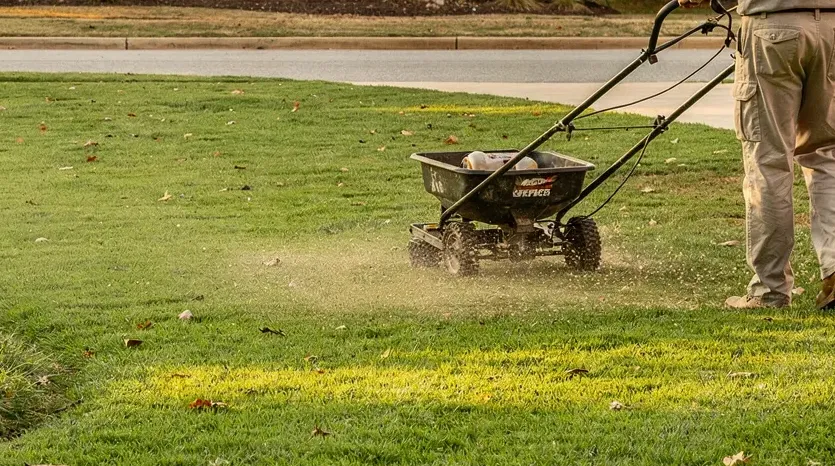
Rivermoore’s 8-round lawn care program continues through autumn with targeted fall feeding and weed control. Each application supplies the nutrients your turf needs before winter dormancy. Pre-emergent and post-emergent weed treatments run alongside the fertilizer, stopping cool-season weeds that invade thinning lawns. The program adjusts for your grass type, whether you have bermuda, zoysia, or tall fescue.
How does core aeration and overseeding work for fescue lawns?
Fall is the critical window for fescue recovery. Rivermoore provides core aeration to relieve soil compaction, then follows with tall fescue overseeding. The new seed germinates in cooler temperatures and fills bare patches before spring weeds take hold. This two-step process rebuilds density and strengthens the lawn against next year’s stress.
What guarantees protect your fall investment?
No contracts bind you to Rivermoore’s services. A handshake satisfaction guarantee backs every treatment. If the results fall short of expectations, the team returns to make it right. Rivermoore has been named Best of Gwinnett eight years running.
How do you get started with fall lawn care?
Homeowners receive free estimates and an online instant quote. Owner Eric Raymond holds a Georgia Category 24 license and brings more than 20 years of industry experience to every property. To get started, request a free, no-obligation estimate or get an instant quote online at beweedfree.com.
Frequently Asked Questions
When is the last fall feeding for bermuda and zoysia?
By early October. After that, switch to potassium so the grass hardens off for winter.
Is fall the main feeding season for tall fescue?
Yes. Fescue grows most in cool weather, so fall feedings build the roots it needs to get through next summer.
Should I aerate and overseed when I fertilize fescue?
Often, yes. Core aeration and fall overseeding thicken a thin fescue lawn, and fertilizer helps the new seed establish.
Do I have to sign a contract?
No. Rivermoore works without contracts.
What areas does Rivermoore serve?
Rivermoore is based in Auburn and serves Auburn, Dacula, Mulberry, Buford and the rest of Gwinnett County.
Contact Us
At Rivermoore Lawn Care, we are so confident in our work that we are willing service you without a contract. If we do not perform to your high standard, we will make it right, and you are not locked into anything. Our deals are sealed with a handshake. Our lawn treatment service will speak for itself; it will keep you coming back year after year. Serving the Auburn area and surrounding since 2013, contact us today to put your lawn and landscape on the path to full health.
Rivermoore Lawn Care
Offering Fertilization And Weed Control in Auburn and Surrounding Cities. Transform your lawn today and contact Rivermoore Lawn Care to arrange for your first appointment.